
History

On October 8, 1871, a tornado of fire more than 1,000 feet high and five miles wide ripped through the town of Peshtigo, Wisconsin, destroying over 2,400 square miles of forest and killing more than 2,200 people, according to the book Firestrom at Peshtigo by Denise Gess and William Lutz.
At the time, Peshtigo was a booming lumber town, surrounded by billion trees, each three to six feet in diameter and towering 120-170 ft. high. The largest woodenware factory in the world was located here, busily producing pails, tubs, ax handles, clothespins, broom handles, barrel covers, and shingles. Logs were floated down the river to the Peshtigo Harbor at the mouth of the Peshtigo River where it met Green Bay, to be shipped to other ports. Lumber was gold.
After an unusually hot, dry spring and summer, atmospheric conditions and a superheated landscape combined to create a firestorm-nature’s nuclear explosion. It is estimated that the heat from the flames was at least 2000 degrees Fahrenheit. The inferno roared to an earth-shaking crescendo, advancing on winds of 110 miles per hour or more.
Some people survived by staying in the river, lying in the trenches, or by a quirk of the unpredictable fire. Many died from fire, of course, but others from hypothermia in the water, some killed their families to spare them from burning, and others killed themselves. More died after from fever and shock.
The only structures in Peshtigo that survived the fire were the framework of an unfinished house and the brick walls of a kiln. With all the businesses, homes, and trees destroyed and the soil severely damaged, recovery was a challenging process.
Ironically, the Great Chicago Fire took place on the same fateful night, overshadowing the death and destruction caused by the Peshtigo Fire.
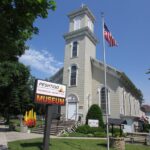
The great Peshtigo fire of 1871 claimed the lives of 800 men, women and children and leveled the town. It was America's most disastrous forest fire. It occurred on the same day as the Great Chicago Fire, and so received less notoriety, despite the fact that there was greater loss of life and far more property damage. A museum is housed in the first church built in Peshtigo after this disaster, and is a living model of the area's history. The Peshtigo Fire Cemetery, on property adjoining the Fire Museum, contains the graves of many persons who lost their lives in the fire of October 8, 1871. A mass grave contains the remains of several hundred unidentified persons, and a monument is erected to the 800 persons who died in the holocaust.
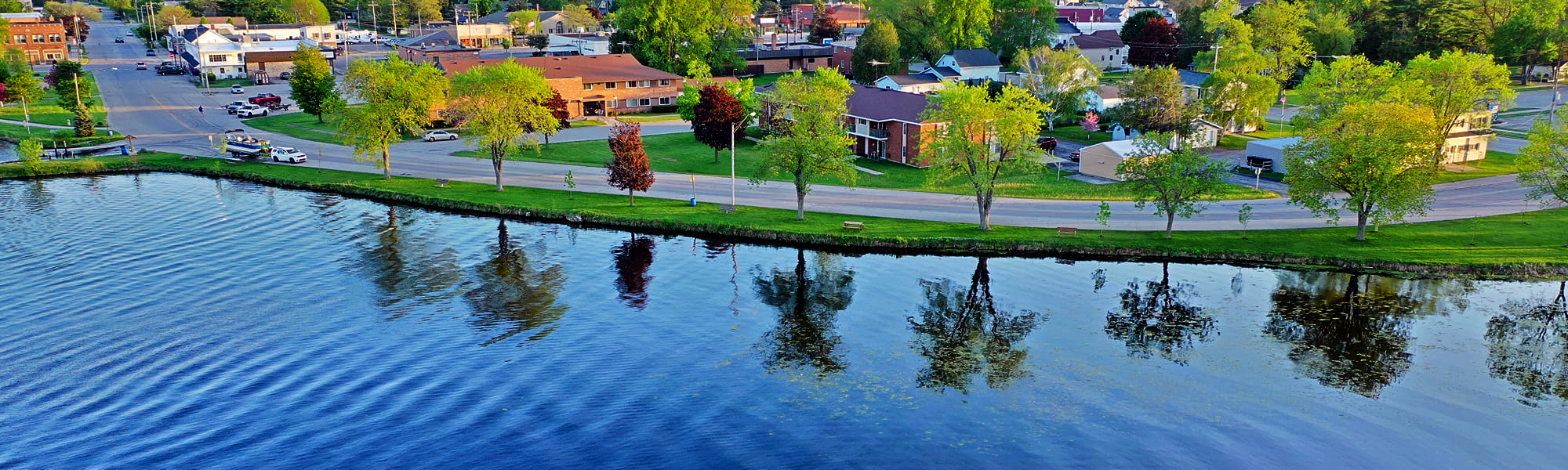
Peshtigo has grown from the ashes of this great disaster to become the second largest city in Marinette County. This quaint town offers a variety of recreation opportunities, excellent dining, and a lovely city park and campground.
Peshtigo Historical Day
This annual event held at Badger Park recognizes the anniversary of the rebuilding and incorporation of the city of Peshtigo after its great fire destroyed the city. Held annually in September, activities include a run/walk, parade, food entertainment, and a Civil War contingent.
Peshtigo Fire Facts & Trivia
- The Pestigo Fire occurred on the same day as the Great Chicago Fire - October 8, 1871.
- The City of Peshtigo rebuilt and incorporated in 1903.
- The Peshtigo Fire Museum is housed in the first church built in Peshtigo after the disaster.
- The Peshtigo Fire killed about eight times more people than the Chicago Fire.
- The official population of Peshtigo in 1871 was 1,750. Many immigrants, finding work in the local lumber and other industries, swelled the population much higher than the official census.
- A man convicted of looting after the fire could not be lynched because all the rope had been destroyed in the fire.
- Nineteen survivors attended ceremonies on the 80th anniversary of the fire in 1951. The oldest was 96.
- It covered 2,400 square miles - much larger than the village itself.
- In the year 2000, 11,555 people from all 50 states, Washington, D.C., and 22 foreign countries visited the Peshtigo Fire Museum.
- The memorial at the Peshtigo Fire Cemetery was the first official State Historical Marker authorized by the State Historical Society of Wisconsin.
- Peshtigo was one of the few cities in the country untouched by the depression of the 1930s.